
Personal Development
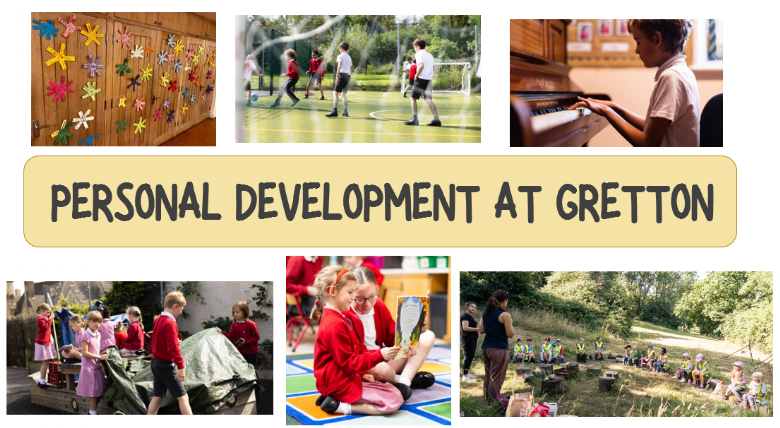
At Gretton Primary School, we believe in developing the whole child; equipping them with the knowledge, skills, vocabulary and conceptual understanding to succeed in education and in later life.
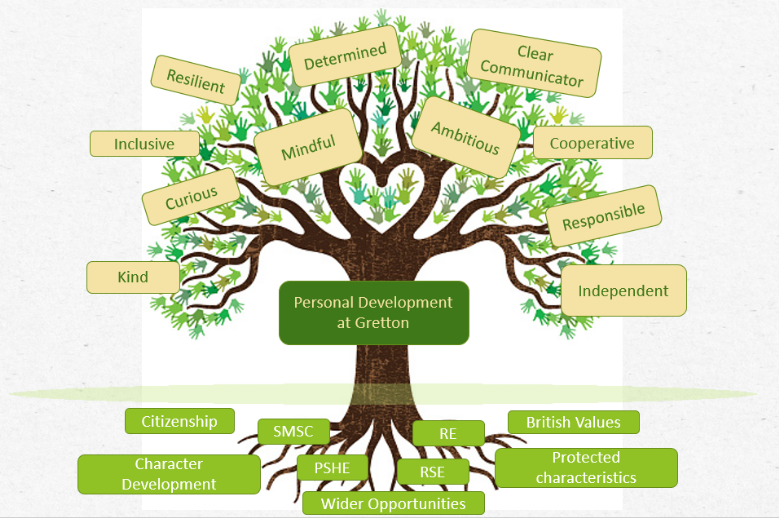
We aim to develop learners that are mindful, inclusive, responsible, ambitious, resilient and curious. These character traits are developed through many areas of our curriculum and through carefully selected trips, visitors, events and curriculum enhancements.
Developing pupil’s character allows them to achieve positive health, education and employment. It encourages pupils to understand, value and demonstrate positive behavioural traits that makes them well-rounded citizens, to better understand themselves and work on their weaknesses along with instilling a moral compass in understanding and interacting with other people.
We provide our pupils with the building blocks to build and grow their own strong, moral principles and core values which they can turn to later on in life as a guide to success. This enables our children to develop skills and traits that help them to tackle any problem or situation that arises in their education and life.
Through a whole-school approach, the character traits will be delivered and modelled explicitly by all staff through tailored and appropriate activities and experiences.
BRITISH VALUES

We promote fundamental British values and mutual respect and tolerance of those with different faiths and beliefs. We actively promote British values, encouraging our pupils to regard people of all faiths, races and cultures with respect and tolerance. Ultimately, we aim to help pupils understand:
- The importance of combatting discrimination
- How we can influence decision-making by taking part in democratic processes like voting and petitioning
- Our freedom under British law to choose different faiths and beliefs
- That the law is there to keep us safe
Children also engage with the values through the curriculum, in ways that are suitable for their age and context. For example, in some subjects there are opportunities to think about traditions from different cultures and religions. Extra-curricular activities such as games teach children about the importance of rules. Pupil votes, questionnaires and school council/leadership roles are other ways that your children can have their voices heard and learn about democracy.
Our duty to actively promote fundamental British values means that we always present political views to children in a balanced way. We are also responsible for challenging prejudiced or extreme opinions and behaviour.
At Gretton Primary School, these values are reinforced regularly and in the following ways:
Democracy
Democracy is embedded throughout our school curriculum from the moment the children enter our Reception class. Pupils are always listened to by adults and are taught to listen carefully to each other, respecting the right of every individual to have their opinions and voices heard. Pupils also have the opportunity to air their opinions and ideas through our School Council. The elections of the School Council members are based solely on pupil votes, reflecting our British electoral system and demonstrating democracy in action. Our older children present their proposal to become a school council member to their class. Children also vote for their choice of movie for movie nights whilst EYFS vote each day for the class story.
The Rule of Law
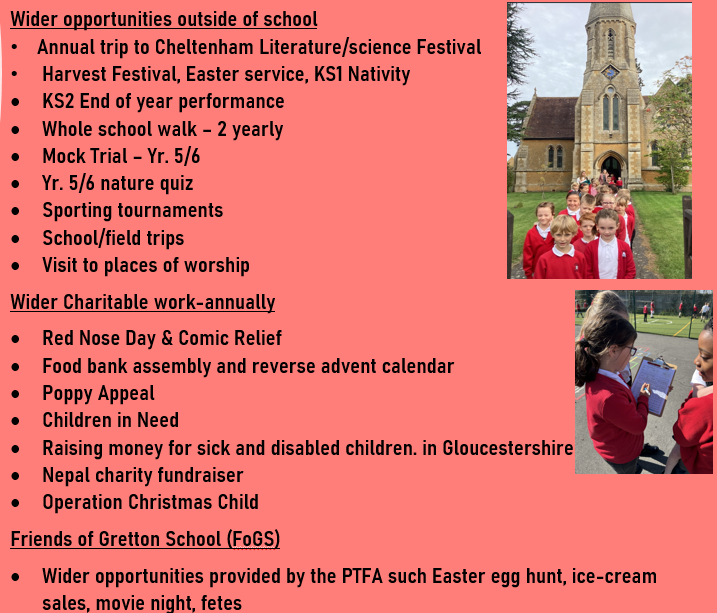
The importance of laws, whether they are those that govern the class, the school or the country, are consistently reinforced. Our school rules and expectations are deeply embedded in our work every day. Our rules are regularly discussed in class and during whole school assemblies and are clearly understood by all and seen to be necessary to ensure that every class member is able to learn in a safe and ordered environment. Our pupils are taught the values and reasons behind laws, that they govern and protect us, the responsibilities that this involves and the consequences when laws are broken. Our older children participate in an annual ‘Mock Trial’ where they become either part of the defence or prosecution and gain a greater understanding of the legal system in the UK. Our School beat officer also visits the school to provide workshops and lessons to different classes.
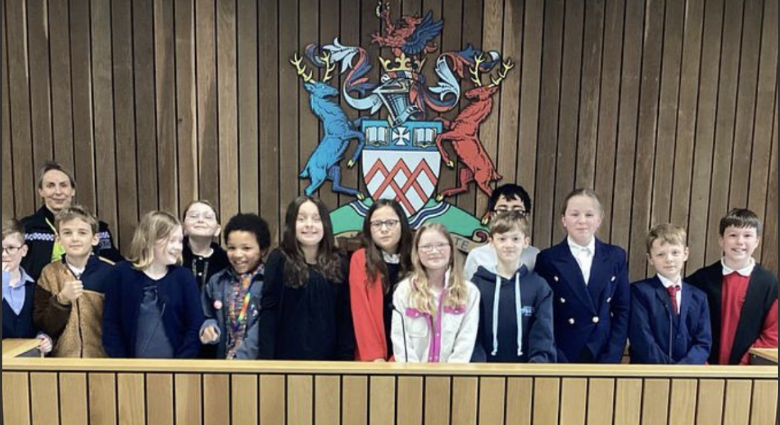
On Monday, Eagles went to The University of Gloucestershire to participate in a mock trial. Our job was the defence and we had to prove that our defendant (Will) was not guilty. As we were seated in the court room, everyone was buzzing with nervous energy. As the trial began, witnesses from both schools were questioned by solicitors and the magistrates could ask additional questions. The court case was finished with the closing statements read by the prosecution and defence solicitors. The magistrates returned and delivered a unanimous not guilty verdict earning our school the win. Everyone did a great job and we were delighted with the result.
Henry and Will
Individual Liberty
Within school, pupils are actively encouraged to make choices, knowing that they are in a safe and supportive environment. This can be through daily choices, such as what they would like to eat that day, our book votes in class or where they would like to play at lunchtime. Children are also encouraged to make choices linked to challenge and learning activities, of how they record and present their work and of participation in our extra- curricular activities. Our pupils are encouraged to know, understand and exercise their rights and personal freedoms and are advised how to exercise these safely; examples of this can be clearly seen in our e-safety and PSHE lessons.
Mutual Respect
Our school values and behaviour policies have evolved around our Golden Rules, with one of the rules being ‘We are kind and respectful.’ Adults throughout the school model, demonstrate and promote respect for others as do older children who have suitable, age related, tasks and responsibilities and this is reiterated throughout classroom and learning rules, as well as our behaviour.
Tolerance of Those with Different Faiths and Beliefs
Our Golden Rule ‘We are kind and respectful’ supports tolerance of those who have different faiths and beliefs. We enhance pupils’ understanding of different faiths and beliefs through religious education studies; PSHE work; visits from others in the community and a diverse range of texts used daily in each class. Beliefs, traditions and customs from around the world are studied and celebrated. Through these activities, our pupils gain an enhanced understanding of their place in a culturally diverse society and an understanding of the importance of identifying and combatting discrimination.
PROTECTED CHARACTERISTICS
At Gretton Primary School, we believe it is important to teach the children to recognise and accept difference. We have a duty to prepare them for modern life in Britain. In school and their future workplace they will be working alongside peers and colleagues of different race, religion, sex, age, disability and sexual orientation and it is vital that future generations are able to accept differences, accept the views of others and treat each other with respect, even if they disagree. We expect the children to express their views with kindness and consideration for the feelings of others.
The Ofsted framework states that inspectors will make a judgement on the personal development of learners by evaluating the extent to which: The school “prepares learners for life in modern Britain by: equipping them to be responsible, respectful, active citizens who contribute positively to society; developing their understanding of fundamental British values; developing their understanding and appreciation of diversity; celebrating what we have in common and promoting respect for the different protected characteristics as defined in law.”
As one of the ways that we teach children to understand and appreciate diversity, celebrate what we have in common and respect the different protected characteristics we have chosen to use some aspects of a programme called 'No Outsiders'. No Outsiders is based on children’s picture books, many of which you may already have read with your children. Each class read one of our chosen books from the programme every half term and then discuss it as a class. The class discussion is child-led and offers opportunity for the children to make observations and consider the simple messages in the text, all of which link to the Equality Act in an age-appropriate way.
The Equality Act (2010) is British Law and protects people from discrimination in the workplace and wider society. It refers to foll
owing ‘protected characteristics.’
- Race,
- Religion or belief,
- Sex,
- Age,
- Disability,
- Sexual orientation,
- Pregnancy or maternity,
- Marriage or civil partnership,
- Gender reassignment
We pick books that we feel are most suitable for each cohort and staff use their professional judgement during the discussion around that text. Parents are informed about the books that the class will be reading and they are shared on each terms class newsletter. Parents are also invited to come into school to review the books, should they choose to do so.
PICTURE NEWS

Picture News is a fabulous resource that we use to enhance the children's development and understanding of the world around them. This encapsulates our PSHE, SMSC teaching and supports our school ethos, enabling us to continue to strive to promote the British Values as well as the 9 Protected Characteristics of Equalit
Each week there are KS1 and KS2 assemblies based around the News topic for that week. These assemblies are produced by an enthusiastic team of teachers and education consultants, passionate about education and current affairs!
We know that children see stories in the news they are curious or confused about. As a teacher, this can sometimes be tricky to explain. That’s why Picture News exists. It helps our staff to show your children the world around them in a child-friendly way
Spiritual, Moral, Social and Cultural Development at Gretton Primary School
Gretton Primary School provides a wide range of planned opportunities that promote pupils’ spiritual, moral, social and cultural development, embedded across the curriculum, enrichment activities and wider school life.
Spiritual Development
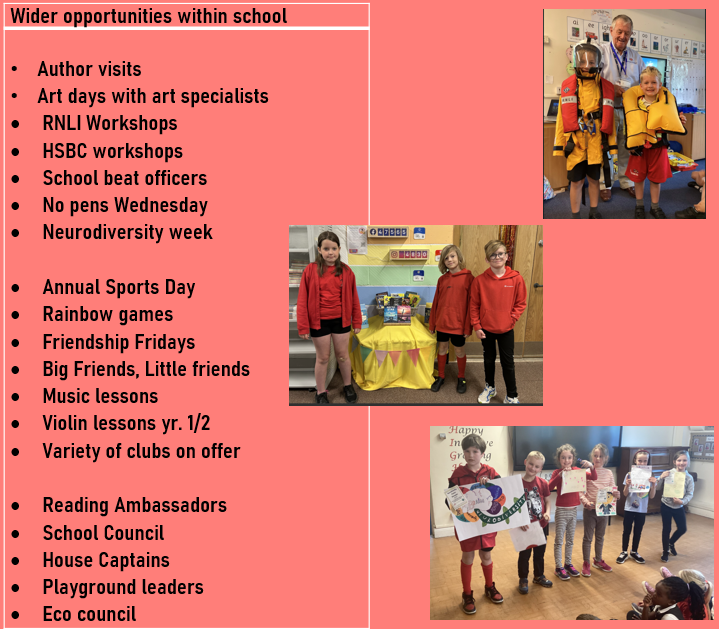
Pupils’ spiritual development is supported through opportunities for reflection, creativity and personal growth. Weekly PSHE lessons encourage pupils to explore feelings, wellbeing and resilience. This is further enhanced through experiences such as music lessons, including violin tuition in Years 1 and 2, whole-school performances, and participation in events such as Young Voices. Assemblies and celebrations such as Harvest Festival, Easter services, and end-of-year and nativity performances provide opportunities for reflection and a sense of belonging. Forest school sessions also provide an opportunity for pupils to pause and be mindful in the moment. Educational visits, including visits to places of worship, help pupils explore beliefs and values beyond their own experiences.
Moral Development
Moral development is strongly promoted through PSHE, assemblies and real-life learning opportunities. Programmes such as No Outsiders and Picture News assemblies support pupils in discussing moral issues, fairness and respect in an age-appropriate way. Workshops delivered by external providers, including RNLI, HSBC, School Beat officers, and the ‘Into the Net’ online safety programme, help pupils understand responsibility, personal safety and making informed choices. Charitable activities, such as Red Nose Day, Children in Need, Food Bank initiatives, Poppy Appeal, and Operation Christmas Child, encourage empathy, compassion and social responsibility.
Social Development
Pupils develop strong social skills through teamwork, leadership and cooperation. Opportunities such as School Council, Reading Ambassadors, House Captains and Playground Leaders allow pupils to take on responsibility and contribute positively to school life. Events such as Friendship Fridays, Big Friends, Little Friends, and collaborative learning approaches (including No Pens Wednesday) support communication and cooperation. Residential experiences in Years 4, 5 and 6, sporting festivals, and a wide range of clubs further develop independence, teamwork and resilience.
Cultural Development
Cultural development is promoted through exposure to a wide range of experiences that broaden pupils’ understanding of the world. Art Days with specialist artists, author visits, and trips to events such as the Cheltenham Literature and Science Festival enrich pupils’ cultural awareness. Participation in sporting tournaments, oracy events and school trips help pupils appreciate diversity, achievement and different talents. The curriculum, assemblies and enrichment activities promote respect for different cultures, beliefs and lifestyles, preparing pupils well for life in modern Britain.
Through a combination of weekly PSHE lessons, assemblies, enrichment activities, leadership roles, educational visits and strong community links, the school provides high-quality opportunities for pupils’ spiritual, moral, social and cultural development, ensuring pupils are confident, reflective and respectful members of the wider community.